UK Mattress Sizes Guide 2026: Complete Bed Size Chart & Dimensions
Everything you need to know about UK mattress sizes, from Small Single to Super King. Compare dimensions, understand the differences between UK and European sizes, and find the perfect fit for your bedroom.

Written by
Emma Thompson
Senior Content Writer & Researcher
Choosing the right mattress size is one of the most important decisions you'll make when buying a new bed. Get it wrong, and you could end up with a mattress that doesn't fit your bed frame, leaves you cramped with a partner, or overwhelms a small bedroom.
In the UK, we have our own unique sizing standards that differ from European, American, and Australian measurements. This can cause real confusion, especially when shopping at retailers like IKEA that use European dimensions, or when buying bedding that might come from international suppliers.
This comprehensive guide covers everything you need to know about UK mattress sizes. We've included detailed dimensions in both centimetres and inches, visual comparisons to help you visualise the differences, room size recommendations, and answers to the most common questions British shoppers ask about bed sizes.
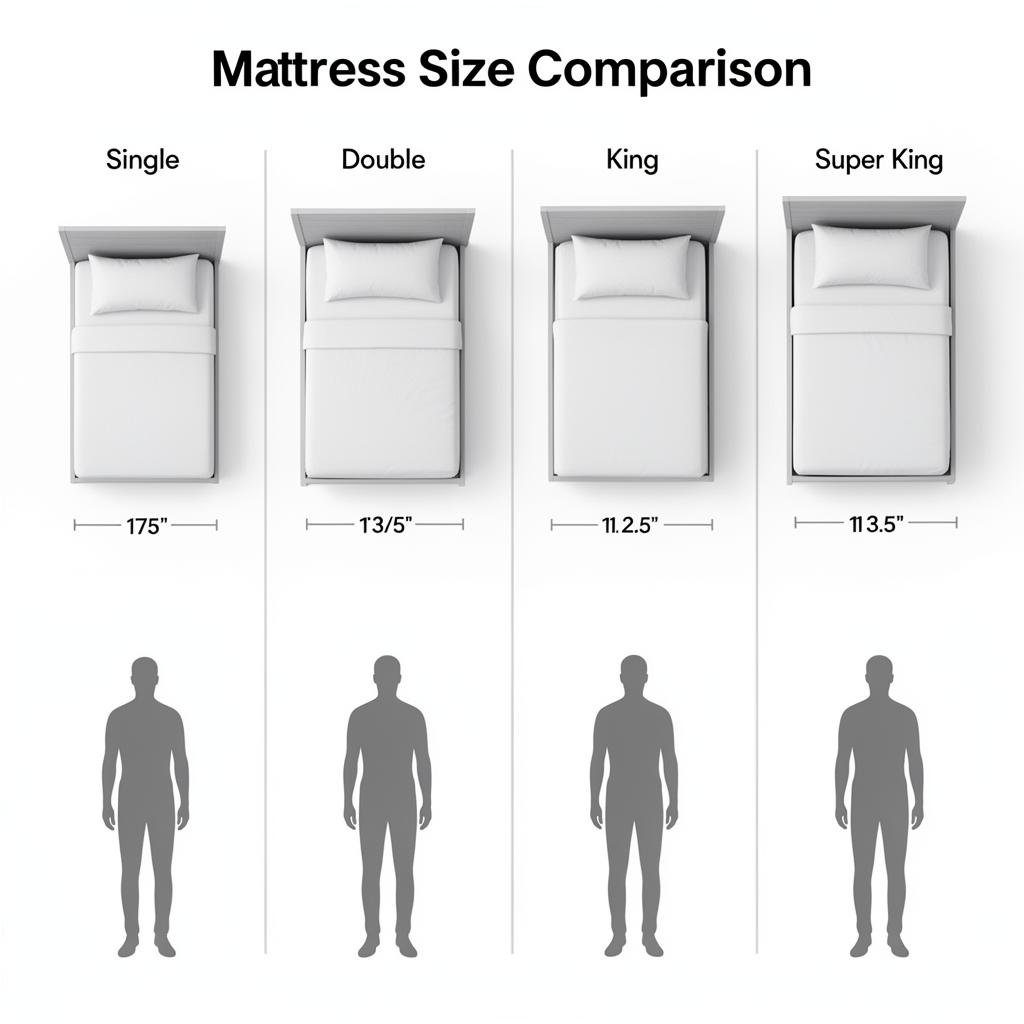
Visual comparison of UK mattress sizes from Single to Super King with scale reference
Standard UK Mattress Sizes Chart
The table below shows all standard UK mattress sizes with dimensions in centimetres, inches, and feet. These are the sizes you'll find at most British retailers including Dreams, Bensons, and John Lewis.
| Size Name | Width (cm) | Length (cm) | Width (ft/in) | Length (ft/in) | Ideal For |
|---|---|---|---|---|---|
Small Single | 75cm | 190cm | 2'6" | 6'3" | Children, guest rooms, narrow spaces |
Single Popular | 90cm | 190cm | 3'0" | 6'3" | Children, teenagers, single adults, guest rooms |
Small Double (Three-Quarter) | 120cm | 190cm | 4'0" | 6'3" | Single adults who want more space, couples in smaller rooms |
Double Popular | 135cm | 190cm | 4'6" | 6'3" | Couples, single adults who want maximum space |
King Popular | 150cm | 200cm | 5'0" | 6'6" | Couples wanting extra space, taller individuals |
Super King Popular | 180cm | 200cm | 6'0" | 6'6" | Couples prioritising maximum sleeping space, families with co-sleeping children |
National Bed Federation Standards
These sizes are set by the National Bed Federation (NBF), the UK's trade association for bed manufacturers. While there can be minor variations of 1-2cm between manufacturers, these are the standard dimensions you should expect from quality UK retailers.
Visual Size Comparison
See how UK mattress sizes compare to each other at a glance. The proportional diagram below shows the relative width and length of each standard size.
Small Single
75 × 190cm
Single
90 × 190cm
Small Double (Three-Quarter)
120 × 190cm
Double
135 × 190cm
King
150 × 200cm
Super King
180 × 200cm
Key Observations:
- A Super King is 2.4× wider than a Small Single
- King & Super King are 10cm longer (200cm vs 190cm)
- A Double gives each partner only 67.5cm width
- A Super King gives each partner 90cm width (like a Single each)
UK Mattress Sizes Explained in Detail
Understand the pros, cons, and ideal use cases for each UK mattress size to make the best choice for your needs.
Small Single Mattress
75 × 190cm (2'6" × 6'3")
The Small Single (also known as a "two-foot-six") is the narrowest standard mattress size in the UK. At just 75cm wide, it's designed primarily for children's rooms, box rooms, or narrow guest bedrooms where space is at a premium.
Best for: Children aged 4-12, guest rooms, small box rooms
Not ideal for: Teenagers, adults, or anyone over 5'6"
Single MattressPopular
90 × 190cm (3'0" × 6'3")
The Single mattress is the UK standard for children, teenagers, and single adults. At 90cm wide, it provides enough space for comfortable solo sleeping whilst fitting easily into most bedrooms. It's also the most common size for bunk beds and cabin beds.
Best for: Children, teenagers, single adults, guest rooms
Not ideal for: Restless sleepers, adults over 5'10" who need length
Small Double (Three-Quarter)
120 × 190cm (4'0" × 6'3")
The Small Double—often called a "Three-Quarter" or "4ft bed"—bridges the gap between Single and Double. It's perfect for single sleepers who want sprawling space, teenagers transitioning from a Single, or couples in genuinely tiny bedrooms where a full Double won't fit.
Best for: Single adults wanting more space, teenagers, small flats
Not ideal for: Couples who value personal space during sleep
Double MattressMost Popular
135 × 190cm (4'6" × 6'3")
The Double remains the UK's most popular mattress size, found in millions of British bedrooms. At 135cm wide, it provides enough space for two people to sleep comfortably, though each partner only gets 67.5cm of width—less than a Single mattress each.
Best for: Couples in standard bedrooms, single adults wanting luxury space
Not ideal for: Couples who move a lot, tall individuals over 6'
King Size MattressRecommended
150 × 200cm (5'0" × 6'6")
The King size offers a significant upgrade from the Double—15cm wider and 10cm longer. This extra length (200cm total) makes it ideal for taller individuals, while the additional width means each partner gets 75cm of personal sleeping space.
Best for: Couples prioritising comfort, tall individuals, master bedrooms
Not ideal for: Rooms under 11ft × 12ft, tight doorways/staircases
Which King to buySuper King MattressPremium
180 × 200cm (6'0" × 6'6")
The Super King is the largest standard UK mattress size, offering unparalleled sleeping space. At 180cm wide, each partner effectively gets their own Single mattress width (90cm), making it perfect for couples who value personal space or families who co-sleep with young children.
Best for: Couples wanting maximum space, co-sleeping families, luxury bedrooms
Not ideal for: Small rooms, difficult access (narrow stairs/doors)
UK vs European (EU) Mattress Sizes
European mattress sizes differ from UK standards—a crucial consideration when shopping at IKEA or buying from European manufacturers. Here's exactly how they compare.
| UK Size | UK Dimensions | EU Equivalent | EU Dimensions | Difference |
|---|---|---|---|---|
| Single | 75 × 190cm | EU Single | 90 × 200cm | 10cm longer |
| Double | 120 × 190cm | EU Double | 140 × 200cm | 5cm wider, 10cm longer |
| King | 150 × 200cm | EU King | 160 × 200cm | 10cm wider, same length |
| Super King | 180 × 200cm | EU Super King | 180 × 200cm | Same dimensions |
IKEA & European Bed Frame Warning
If you own an IKEA bed frame or any bed purchased from a European manufacturer, you'll need a European-sized mattress. A standard UK mattress will not fit properly.
- •An EU Double mattress (140 × 200cm) is 5cm wider and 10cm longer than a UK Double (135 × 190cm)
- •A UK mattress in an IKEA frame will leave uncomfortable gaps and may shift during sleep
- •Always measure your bed frame interior before purchasing
Where to Buy EU-Sized Mattresses in the UK
- IKEA (all locations stock EU sizes)
- Emma Sleep (offers both UK and EU sizes)
- Specialist EU bed retailers online
- Custom mattress manufacturers
Why Do EU Mattresses Differ?
European mattress sizes follow metric-based standards developed independently from British imperial-based sizes. The EU standardised on 200cm length (versus UK's 190cm for smaller sizes) to accommodate taller continental Europeans, particularly in Scandinavian countries.
Children's & Nursery Mattress Sizes
From cot mattresses to junior beds, here are the standard sizes for children's sleep at every stage.
| Mattress Type | Width (cm) | Length (cm) | Imperial | Typical Age Range |
|---|---|---|---|---|
Cot Mattress | 60cm | 120cm | 2'0" × 4'0" | 0-2 years |
Cot Bed Mattress | 70cm | 140cm | 2'4" × 4'7" | 1-4 years |
Toddler Mattress | 70cm | 140cm | 2'4" × 4'7" | 2-5 years |
Junior Bed Mattress | 75cm | 175cm | 2'6" × 5'9" | 4-8 years |
Safety Note for Baby & Toddler Mattresses
Always ensure the mattress fits snugly in the cot or bed frame with no gaps larger than 3cm. A mattress that's too small can create dangerous gaps where a baby could become trapped. Look for mattresses meeting BS 1877 and BS 7177 safety standards.
Room Size Requirements for Each Mattress Size
Don't just consider the mattress—consider your room. Here's the minimum room size needed for comfortable access and furniture placement.
Small Single
6ft × 8ft minimum
Single
7ft × 9ft minimum
Small Double
9ft × 10ft minimum
Double
10ft × 11ft minimum
King
11ft × 12ft minimum
Super King
12ft × 13ft minimum
Room Planning Tips
What These Minimums Include:
- 60-75cm clearance on accessible sides for walking
- Space at foot of bed for movement
- Allowance for bedside tables
What to Consider:
- Door swing clearance (90cm minimum)
- Wardrobe door opening space
- Radiator positions and window access
How to Measure Your Bed Frame for a New Mattress
Follow these steps to ensure your new mattress fits perfectly in your existing bed frame.
Remove All Bedding
Strip the bed completely, including any mattress protectors, toppers, and the old mattress if still present.
Measure the Interior Width
Measure the inside of the bed frame from left to right, at the widest point. Don't measure the outer frame—measure where the mattress will actually sit.
Measure the Interior Length
Measure from the headboard end to the footboard end, inside the frame. For frames without a footboard, measure to where the slats or base ends.
Check Your Measurements
Compare your measurements to the standard sizes above. If your frame is an odd size (common with antique beds, boat berths, or caravans), you may need a custom-sized mattress.
Pro Measuring Tips
- Use a metal tape measure for accuracy—fabric tapes can stretch
- Measure in centimetres for precision when comparing to specifications
- Allow 1-2cm tolerance—mattresses can vary slightly from stated dimensions
- For slatted bases, check slat gaps don't exceed 7cm (mattress warranty requirement)
- If in doubt, contact the mattress retailer with your measurements before ordering
Expert Tips for Choosing the Right Mattress Size
For Couples
If budget and space allow, always go bigger than you think you need. A King size gives each partner 75cm of width—that's 7.5cm more than half a Double. A Super King gives you each a full Single mattress worth of space (90cm).
Consider motion isolation too—if one partner moves frequently, a larger mattress with good motion isolation (memory foam or pocket springs) will reduce sleep disturbance.
For Taller Individuals
If you're over 6' tall (183cm), strongly consider a King or Super King. Both are 200cm long—10cm longer than Single, Small Double, and Double mattresses. Those extra 10cm can be the difference between comfortable sleep and cold feet.
Some UK manufacturers offer "extra long" versions of smaller sizes if you can't accommodate the width of a King.
For Small Spaces
In a box room or studio flat, a Small Double (120cm) offers more sleeping space than a Single (90cm) whilst being 15cm narrower than a full Double (135cm). It's often the Goldilocks choice for small bedrooms.
Consider an ottoman or divan bed with storage to maximise the space you do have.
For Growing Children
Children grow fast. Rather than buying a Small Single that they'll outgrow in a few years, consider investing in a full Single (90 × 190cm) that will see them through to adulthood.
If space allows, a Small Double can be an excellent choice for a teenager's room—giving them space to grow and occasionally host sleepovers.
Frequently Asked Questions About UK Mattress Sizes
Got questions? We've answered the most common queries from British mattress shoppers.
Summary: Finding Your Perfect UK Mattress Size
Choosing the right mattress size is about balancing your sleeping needs, room dimensions, and budget. Here's a quick recap of the key points from this guide:
Quick Size Recommendations
- Single adults: Single (90 × 190cm) or Small Double (120 × 190cm)
- Couples (budget/space limited): Double (135 × 190cm)
- Couples (comfort priority): King (150 × 200cm)
- Maximum space: Super King (180 × 200cm)
- Tall individuals (6'+): King or Super King (200cm length)
Critical Reminders
- ✓ UK and EU sizes are different—always check before buying
- ✓ IKEA uses European sizing, not UK sizing
- ✓ Measure your bed frame interior, not the outer dimensions
- ✓ Allow 1-2cm tolerance for manufacturer variations
- ✓ Consider room clearance when choosing size
The mattress you choose will be where you spend roughly a third of your life—around 3,000 hours per year. Taking the time to select the right size isn't just about comfort; it's about ensuring you get the quality sleep your body needs to function at its best.
If you're still unsure which size is right for you, try our Mattress Quiz for personalised recommendations, or explore our comprehensive Buying Guide for more detailed advice on choosing the perfect mattress for your needs.
About the Author
Emma Thompson
Senior Content Writer & Researcher • Former Home & Interiors Writer, Good Housekeeping
Emma brings 6 years of experience from Good Housekeeping's consumer testing team. She translates complex mattress technology into clear, practical advice that real people can use. Her buying guides and size guides are trusted by thousands of UK consumers making important sleep decisions.