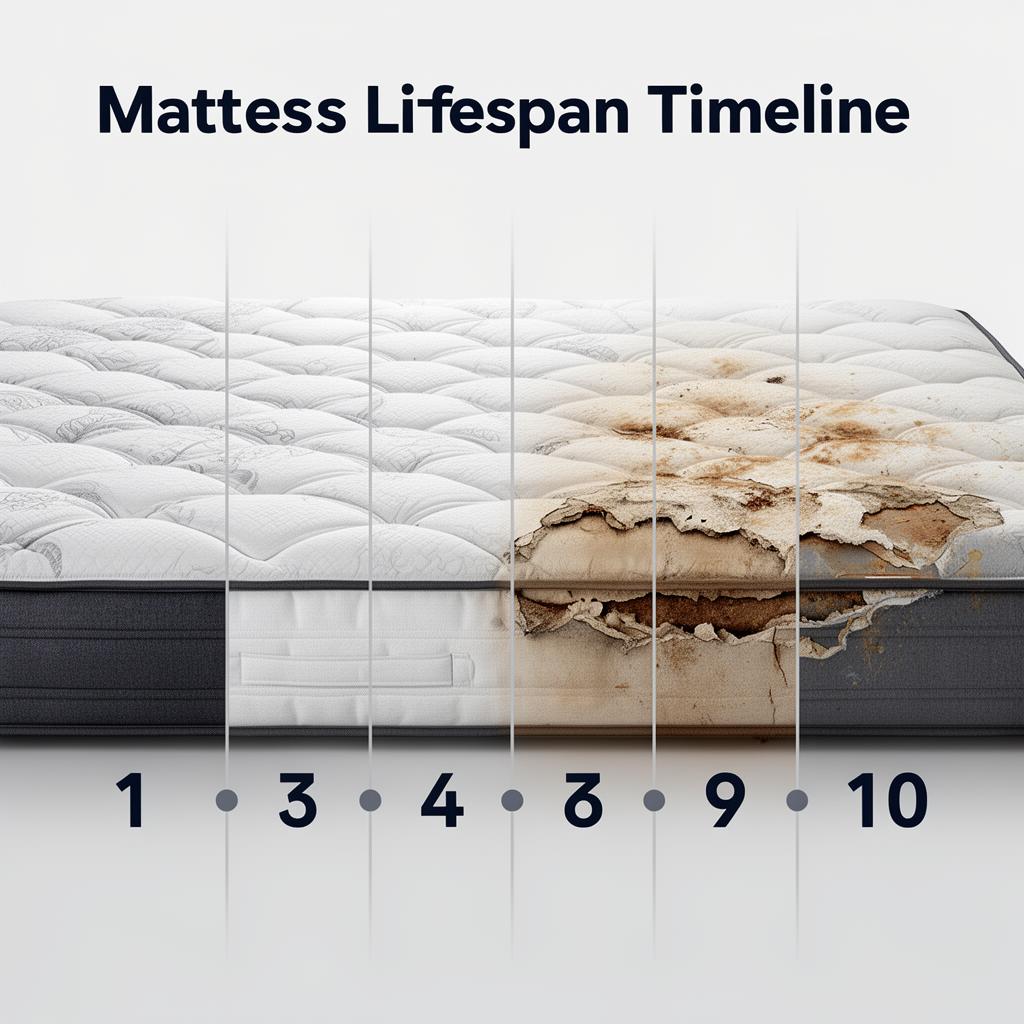
"How long should a mattress last?" is one of the most common questions we receive. The answer depends on your mattress type, how much you weigh, how often you use it, and how well you maintain it. In this comprehensive guide, we'll cover everything UK consumers need to know about mattress lifespan—from expected years by type to the warning signs that it's time for a replacement.
As someone who spent 10 years in quality control at Silentnight—the UK's largest bed manufacturer—I've seen firsthand what makes mattresses last and what causes premature failure. This guide shares that insider knowledge to help you get the most from your investment.
Mattress Lifespan by Type
Different mattress types have different expected lifespans. Material quality within each category also varies significantly—a premium pocket spring mattress will outlast a budget one by years.
| Mattress Type | Average Lifespan | Range | Key Factors | UK Examples |
|---|---|---|---|---|
| Memory Foam | 8-10 years | 7-12 years | Density is key—high-density foam (50kg/m³+) lasts longest | Emma, Simba, Nectar |
| Pocket Spring | 7-10 years | 6-12 years | Spring count and gauge affect longevity | Silentnight, Sleepeezee, Vi-Spring |
| Hybrid | 7-10 years | 6-11 years | Combines foam and spring wear patterns | Simba Hybrid, Emma Hybrid, Brook + Wilde |
| Latex (Natural) | 10-15 years | 8-20 years | Natural latex is exceptionally durable | Dormeo, John Lewis, Dunlopillo |
| Latex (Synthetic) | 6-10 years | 5-12 years | Less resilient than natural latex | Various budget brands |
| Open Coil/Bonnell | 5-7 years | 4-8 years | Interconnected springs wear faster | Silentnight Essentials, Argos Home |
| Innerspring (Traditional) | 6-8 years | 5-10 years | Quality of springs and comfort layers varies | Sealy, Myers, Rest Assured |
Memory Foam: 8-10 Years
Memory foam longevity depends primarily on density. Look for foams rated 50kg/m³ or higher for best durability. Lower-density foams (under 40kg/m³) break down faster and develop permanent body impressions sooner.
Pocket Spring: 7-10 Years
Spring count matters, but gauge (wire thickness) matters more. Look for 1.2-1.5mm gauge springs. Higher spring counts (1500+) often mean smaller, thinner springs that may wear faster than 1000-count mattresses with thicker gauge.
Natural Latex: 10-15 Years
Natural latex is the most durable mattress material available. Look for Dunlop or Talalayprocessed latex with at least 85% natural content. Synthetic blends don't share this exceptional longevity—always check specifications.
Hybrid: 7-10 Years
Hybrids combine pocket springs with foam or latex layers. Longevity depends on both components. Premium hybrids (Simba Hybrid Pro, Emma Hybrid) use high-density foams and robust springs; budget hybrids may compromise on both.
8 Signs Your Mattress Needs Replacing
Don't wait until your mattress completely fails. These warning signs indicate it's time to start shopping—your sleep quality is already being affected.
Visible Sagging or Body Impressions
Permanent indentations greater than 2-3cm where you sleep. You can see the outline of your sleeping position even when not in bed.
Action: Replace within 3-6 months—sagging worsens quickly and affects spinal alignment.
Waking with Back, Neck, or Hip Pain
Pain that wasn't present before, especially if it eases after you get up and move around.
Action: If pain correlates with mattress age (7+ years), replacement is likely needed.
Feeling Springs Through the Surface
On spring mattresses, comfort layers have worn thin if you can feel individual springs.
Action: This indicates severe wear—replace as soon as practical.
Rolling Towards Partner or Centre
The mattress has developed uneven wear, creating a "valley" that pulls you towards the middle.
Action: Consider rotating mattress first; if issue persists, plan replacement.
Increased Allergies or Breathing Issues
Old mattresses accumulate dust mites, skin cells, and allergens that protectors can't fully prevent.
Action: If mattress is 8+ years old and allergies have worsened, replacement may help.
Sleeping Better Elsewhere
You consistently sleep better in hotels, at relatives' homes, or on guest beds.
Action: Indicates your mattress is no longer providing adequate comfort/support.
Mattress is Noisy
Squeaking, creaking, or popping sounds when you move—springs or internal components are worn.
Action: May indicate structural wear; assess other signs to determine urgency.
Visible Wear, Stains, or Odours
Surface degradation, permanent staining, or musty smells that don't respond to cleaning.
Action: Hygiene issue—consider replacement for health reasons even if support is adequate.
Mattress Lifecycle Timeline
Break-in Period
Mattress settles and adapts to your body. Rotate every 2-3 months.
Peak Performance
Optimal comfort and support. Maintain rotation schedule.
Gradual Decline
Support begins to diminish. Monitor for sagging and discomfort.
Replacement Zone
Most mattresses need replacing. Don't ignore warning signs.
UK Brand Warranty Comparison
Warranties vary significantly between UK mattress brands. Remember: warranty length doesn't equal expected lifespan—most warranties only cover manufacturing defects, not normal wear.
| Brand | Warranty | What's Covered | Notes |
|---|---|---|---|
| Emma | 10 years | Manufacturing defects, sagging >2.5cm | Must use with suitable base |
| Simba | 10 years | Structural defects, foam deterioration | Prorated after year 5 |
| Nectar | 15 years | Sagging >3.8cm, manufacturing defects | Full replacement, not prorated |
| Silentnight | 5-10 years | Varies by range—structural issues | Range-dependent coverage |
| Dreams (Own Brand) | 5-10 years | Manufacturing defects | Requires Dreams base |
| IKEA | 10 years | Manufacturing and material defects | Generous returns policy |
| John Lewis | 5 years | Manufacturing defects | 2-year JL guarantee on top |
| Vi-Spring | 30 years | Comprehensive structural warranty | Premium brand, turnover required |
Warranty Warning
Most warranties are voided by: stains (even with a protector that leaked), using an unsuitable base, removing law labels, or purchasing from unauthorised resellers. Always read terms carefully and keep proof of purchase.
How to Extend Your Mattress Lifespan
Proper care can add 2-3 years to your mattress's useful life. These simple maintenance steps protect your investment and keep you sleeping comfortably for longer.
Use a Quality Mattress Protector
A waterproof, breathable protector prevents sweat, spills, and stains from reaching the mattress. This is the single most important thing you can do.
Rotate Regularly
Rotate your mattress 180° (head to foot) every 3-6 months to distribute wear evenly. Some mattresses can also be flipped—check manufacturer guidance.
Use a Suitable Base
Mattresses need proper support. Slatted bases should have slats no more than 7cm apart. Solid divans or platform beds work well for most mattresses.
Maintain Bedroom Humidity
Excess moisture encourages mould and accelerates foam breakdown. Keep humidity between 40-60%. Ventilate bedroom daily.
Avoid Sitting on Edges
Repeatedly sitting on mattress edges compresses those areas faster than lying on the main sleep surface.
Keep Mattress Clean
Vacuum the mattress surface every few months to remove dust and debris. Spot-clean stains promptly with appropriate cleaners.
Don't Jump on the Bed
Especially for children—jumping creates concentrated stress that can damage springs and foam structures.
Air Your Mattress
When changing sheets, leave the mattress uncovered for a few hours to allow moisture to evaporate.
The #1 Way to Extend Mattress Life: Use a Protector
A quality mattress protector is the single most important thing you can do to protect your investment. It prevents sweat, spills, and body oils from penetrating the mattress—the main causes of foam breakdown and hygiene issues.
Look For
- Waterproof barrier
- Breathable top layer
- Machine washable
- Deep-fit skirt
Recommended Brands
- Emma Mattress Protector
- Simba Protector
- TEMPUR-FIT
- Silentnight Protect
