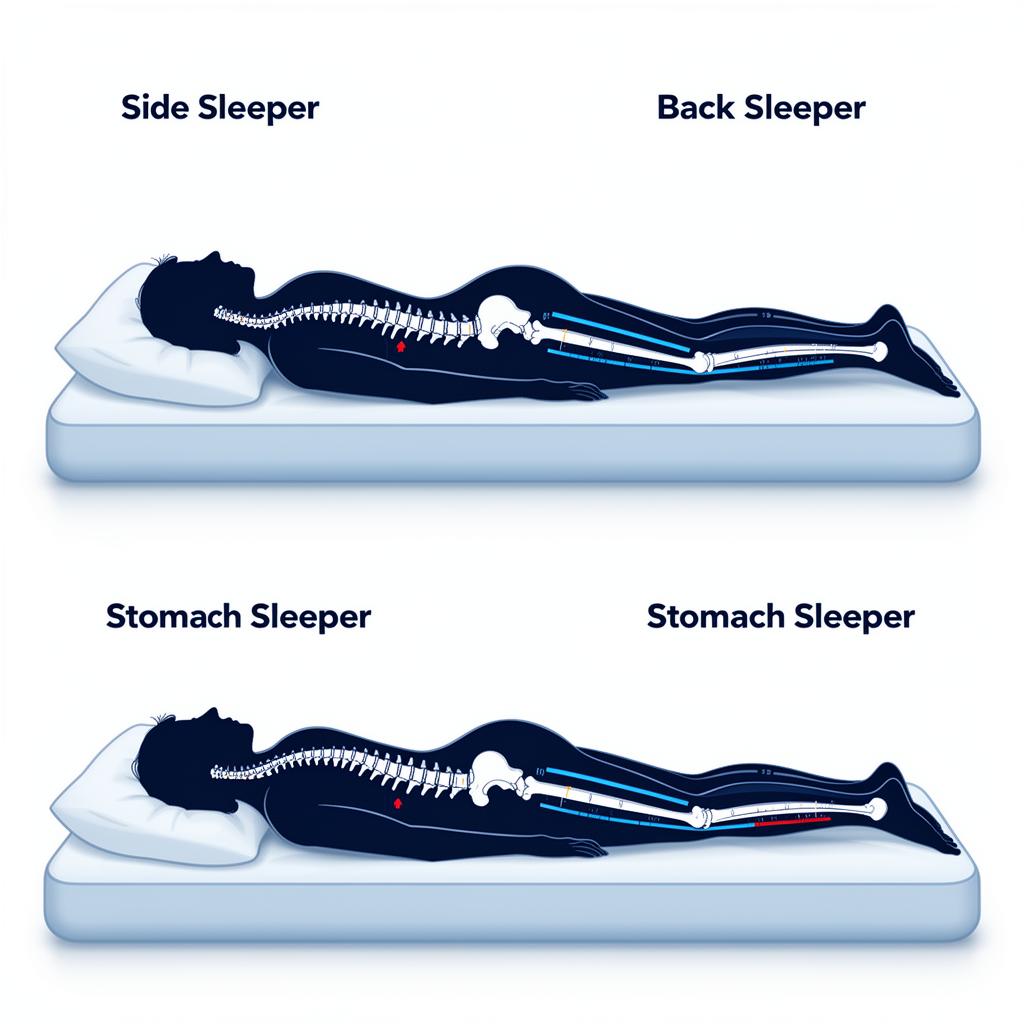
Choosing the right mattress firmness is one of the most important decisions you'll make when buying a new mattress. Get it wrong, and you'll wake up with aches and pains. Get it right, and you'll enjoy deep, restorative sleep every night. The key factor most people overlook? Your primary sleep position.
As a physiotherapist who spent 6 years treating musculoskeletal conditions in NHS clinics, I've seen countless patients whose back pain, neck pain, and poor sleep stem from mattresses that don't match their sleep position. This guide will help you avoid that fate.
Understanding the Firmness Scale
Mattress firmness is typically rated on a 1-10 scale, though we use 1-7 for clarity. Here's what each level means and who it's suited for.
| Level | Name | How It Feels | Best For |
|---|---|---|---|
1 | Extra Soft | Very plush, deep sinking | Rarely recommended—usually too soft for proper support |
2 | Soft | Plush, noticeable sinking | Very light side sleepers only |
3 | Medium-Soft | Cushioned with moderate sinking | Side sleepers under 11 stone |
4 | Medium | Balanced cushion and support | Most side sleepers, lighter back sleepers |
5 | Medium-Firm | Supportive with light cushioning | Most back sleepers, heavier side sleepers |
6 | Firm | Minimal sinking, strong pushback | Back sleepers, stomach sleepers, heavier individuals |
7 | Extra Firm | Very little give, surface sleeping | Stomach sleepers, very heavy individuals, specific medical needs |
Visual Firmness Scale
Side Sleeper
41% of UK sleepers
Side sleepers need pressure relief at the shoulders and hips—the widest parts of the body. A softer mattress allows these areas to sink in while maintaining spinal alignment.
Spinal Alignment
Shoulders and hips must sink enough to keep the spine straight. Too firm = curved spine; too soft = excessive sinking.
Pressure Points
Recommended UK Mattresses
Simba Hybrid Pro
Medium (5)
Excellent pressure relief
Emma Original
Medium (5)
Great for couples
Brook + Wilde Lux
Choice of 3 firmness levels
Customisable
Tips
- Look for memory foam or hybrid mattresses with good pressure relief
- Zoned support helps—softer at shoulders, firmer at hips
- Consider a mattress with a pillow-top for extra cushioning
- Use a contour pillow to maintain neck alignment
Avoid
Very firm mattresses (6-7) cause pressure buildup at shoulders and hips, leading to numbness and tossing.
Back Sleeper
37% of UK sleepers
Back sleepers need support under the lumbar curve to prevent lower back pain. A medium-firm mattress keeps the spine in neutral alignment without excessive sinking.
Spinal Alignment
The lower back (lumbar region) must be supported. Too soft = spine curves unnaturally; too firm = gaps under lower back.
Pressure Points
Recommended UK Mattresses
Simba Hybrid Luxe
Medium-Firm (6)
Excellent lumbar support
Emma Hybrid
Medium-Firm (5-6)
Good edge support
Nectar Memory Foam
Medium-Firm (6)
Responsive support
Tips
- Prioritise lumbar support—some mattresses have reinforced centre zones
- Avoid overly soft pillow-tops that let hips sink too deep
- A thin pillow (or no pillow) prevents neck strain
- Memory foam or latex work well for contouring without excessive sinking
Avoid
Soft mattresses (2-4) allow the pelvis to sink too deep, curving the lower spine and causing pain.
Stomach Sleeper
16% of UK sleepers
Stomach sleepers need the firmest mattresses to prevent the pelvis from sinking, which hyperextends the spine. This is the most challenging position for spinal health.
Spinal Alignment
The pelvis must stay level with the shoulders. Any sinking causes the lower back to arch excessively, leading to pain.
Pressure Points
Recommended UK Mattresses
Simba Earth
Firm (6)
Sustainable and supportive
Emma Firm
Firm (6)
Minimal sinking
Hypnos Orthos Support
Firm (6-7)
Traditional firm support
Tips
- Choose the firmest mattress you find comfortable
- Avoid memory foam—too much contouring for stomach sleeping
- Use a very thin pillow or no pillow to reduce neck strain
- Consider transitioning to side or back sleeping for long-term health
- Pocket springs or latex provide the best support for this position
Avoid
Soft to medium mattresses (2-5) let the pelvis sink, hyperextending the spine and causing lower back pain.
Combination Sleeper
6% of UK sleepers
Combination sleepers change positions throughout the night. They need a versatile mattress that works well in multiple positions without being too extreme in any direction.
Spinal Alignment
Must maintain alignment in all positions without being too firm for side sleeping or too soft for back/stomach.
Pressure Points
Recommended UK Mattresses
Simba Hybrid
Medium (5)
Versatile for all positions
Emma Premium
Medium (5)
Good responsiveness
OTTY Hybrid
Medium-Firm (5-6)
Easy movement
Tips
- Choose responsive materials (latex, pocket springs, hybrids) for easy repositioning
- Avoid pure memory foam—too slow to respond to position changes
- Medium firmness (5) is the safest choice for versatility
- Look for mattresses marketed as "universal comfort"
Avoid
Very soft or very firm mattresses—you need a balanced option that works for multiple positions.
Firmness by Body Weight
Your body weight affects how much you sink into a mattress. Heavier individuals need firmer mattresses to achieve the same level of support as lighter sleepers. Use this table to adjust the standard recommendations.
| Body Weight | Side Sleeper | Back Sleeper | Stomach Sleeper | Notes |
|---|---|---|---|---|
| Under 9 stone (57kg) | Medium-Soft (3-4) | Medium (4-5) | Medium-Firm (5-6) | Lighter individuals don't sink as much—can go softer |
| 9-12 stone (57-76kg) | Medium (4-5) | Medium-Firm (5-6) | Firm (6) | Average range—standard recommendations apply |
| 12-16 stone (76-102kg) | Medium (5) | Medium-Firm (6) | Firm (6-7) | Need firmer support to prevent excessive sinking |
| Over 16 stone (102kg+) | Medium-Firm (5-6) | Firm (6-7) | Extra Firm (7) | Prioritise support and durability; high-density foams essential |
Couples: Finding a Compromise
When partners have different sleep positions, weights, or preferences, choosing a mattress becomes more complicated. Here are practical solutions.
Different Firmness Preferences
Consider a "split" mattress (two single mattresses on a super king base) or brands offering customisable sides
Different Weights
Choose a mattress with zoned support or opt for pocket springs (more independent response) over solid foam
Partner Disturbance
Pocket springs, memory foam, or hybrids minimise motion transfer. Avoid open-coil mattresses.
Temperature Differences
One partner runs hot? Look for cooling hybrids or consider separate duvets with the same mattress.
The "Split King" Solution
If you and your partner have very different needs, consider a "split" super king: two single mattresses (each 90cm wide) placed on a super king frame. You each get your ideal firmness, and there's no compromise required.
Pros
- Perfect firmness for each person
- Zero motion transfer
- Easier to rotate/replace
Cons
- Gap in the middle (use a bridge pad)
- Separate sheet fitting needed
- Higher total cost
